Lower Merion Elite Roofing has provided roof inspection in Lower Merion, PA for more than 20 years, serving surrounding cities including Plymouth Township, Milford Township, Yeadon, Richland Township and West Norriton. We inspect shingle, slate, metal and flat roofs for homeowners, buyers, sellers, property managers and commercial owners.
Our inspections are done by roofers, not salespeople. We look at the roof from the attic as well as from above, because rafters, decking and insulation show problems that the shingles hide. You get a straight assessment of what the roof needs, and a repair is recommended before replacement whenever a repair is the honest answer.
Every inspection ends with a written report and photographs of what we found, organized so you can hand it to a buyer, an insurer, a property manager or another contractor and have them understand it. Where an issue touches a permit rule, such as the township’s two-layer limit, the report says so.
What a Residential Roof Inspection Covers
Roof Covering, Slopes and Ridges
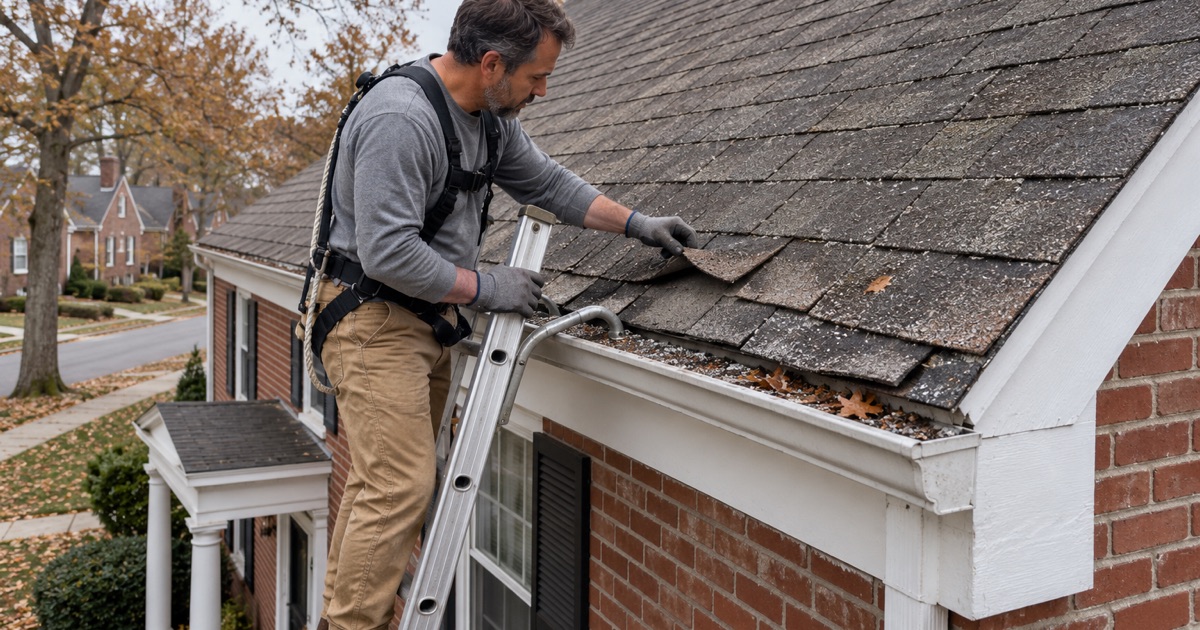
We check each slope for missing, cracked, curling or creased shingles, granule loss, nail pops, and slipped or broken slates. Ridges and hips get a close look, because the cap shingles there take the most wind. We also count the layers at the edge of the roof, since a roof that already carries two layers of shingles will need a full tear-off when it is replaced under Lower Merion’s roofing addendum.
Flashing, Chimneys and Penetrations
Flashing is where most roofs leak, so we inspect step flashing along walls, counter flashing and the reglet joint in the chimney mortar, the cricket behind wide chimneys, kick-out flashing at the bottom of sidewalls, pipe boots, skylights and vents. A cracked boot or caulk smeared over a flashing joint is noted with a photo and its location.
Attic, Decking and Ventilation
Inside the attic we look for water staining on rafters and decking, daylight around penetrations, mold or frost on the underside of the decking, and wet or compressed insulation. We compare the soffit intake with the ridge or roof vents to judge whether the attic breathes properly. Poor ventilation shortens shingle life and contributes to ice dams along the eaves in winter.
Gutters, Drip Edge and Fascia
We check that gutters are pitched toward the downspouts, firmly attached and sized for the roof area they drain, and that drip edge directs water into the gutter rather than behind it. On older houses we inspect built-in box gutters for cracked linings and rot, because those leaks go into the cornice and walls without showing up as a ceiling stain.
Commercial and Low-Slope Roof Inspections
Membrane Seams, Blisters and Punctures
On flat and low-slope roofs we inspect modified bitumen, EPDM, TPO and PVC membranes for split seams, blisters, punctures, shrinkage at the edges and wear around rooftop equipment. These roofs usually fail at seams and terminations long before the field of the membrane wears out, so that is where we focus.
Drains, Scuppers and Ponding
Water that sits on a flat roof for days after rain speeds up membrane aging and finds every weak seam. We check drains, scuppers and gutters for blockages and note low spots where water ponds, so the report shows whether the problem is maintenance, such as clearing a drain, or a slope issue that needs tapered insulation.
Parapets, Curbs and Rooftop Equipment
Parapet walls, equipment curbs and pipe penetrations are where commercial roofs leak most often. We inspect the flashing heights, the termination bars and the coping at the top of parapet walls, and we photograph the condition of each curb so a property manager can plan repairs across a budget cycle.
Inspections for Buying and Selling a House
Before You List a House
Pennsylvania’s seller property disclosure statement asks about the roof’s age, any leaks and any repairs. A roofing inspection before listing gives you accurate answers in writing, and it lets you decide whether to make the repairs yourself or price them into the sale, rather than learning about them from the buyer’s inspector.
When You Are Buying
A general home inspection often views the roof only from the ground or the top of a ladder. A specialist roof inspection during your due-diligence period tells you how many layers are on the roof, the condition of the flashing and decking, and whether a replacement would be a straightforward shingle job or a forced tear-off of slate or a second layer under the local rules.
Historic and Older Houses
On a prewar house we note the original materials, such as slate, copper valleys and box gutters, and whether they can be repaired. If the address sits in one of Lower Merion’s local historic districts, we flag that a future replacement would go to the Historical Architectural Review Board, which affects both timing and material choices.
Inspections After Storms and for Insurers
Checking a Roof After High Wind or Hail
Wind damage is often invisible from the ground. A gust can break the sealant bond on a row of shingles and crease them without tearing them off, and the next driving rain finds the gap. After a storm we check every slope for lifted, creased and missing shingles, cracked or slipped slates, dented metal and debris damage from branches, and we note anything that has appeared since the last time the roof was looked at.
Documenting Damage for Your Own Claim
If there is storm damage, we photograph it, mark the date it was found and describe it in writing, separately from any wear that was already there. That record supports the claim you file with your insurer. When you ask, we will meet the adjuster on the roof to point out what we found, but we do not negotiate the claim or interpret your policy for you.
Roof Age and Insurance Scrutiny
No Pennsylvania law sets an age at which an insurer must stop covering a roof, but insurers look harder at older roofs and many policies pay a reduced, depreciated amount on a worn roof. An inspection report that records the roof’s material, condition and visible repairs gives you something accurate to show an underwriter when a policy renews or a carrier asks questions.
Routine Maintenance Inspections
A roof that is checked every year or two rarely surprises its owner. A maintenance inspection catches cracked pipe boots, slipped slates, clogged valleys and sagging gutters while each is a small repair, and it gives you a written history of the roof that helps when you sell the house or file a claim.
Our Step-by-Step Roof Inspection Process
Step 1: Questions and History
We start by asking what prompted the inspection, when any leaks appeared, the roof’s age if you know it, and any past repairs or insurance claims. That history tells us where to look hardest.
Step 2: Attic Inspection
We go into the attic first, looking for stains, daylight, frost, mold and ventilation problems, and we note the location of anything suspicious so we can find it again from above.
Step 3: Exterior and Rooftop Inspection
We inspect every slope, every flashing and every penetration, plus gutters, drip edge and fascia, photographing each defect with a reference point so it can be found later. On slate and other fragile roofs, this step is done from ladders and roof hooks rather than on foot.
Step 4: Written Report and Recommendations
You receive a written report with photos, organized from urgent repairs to routine maintenance, along with an honest view of how long the roof should last. If repairs are needed, each one is priced as a separate line so you can decide what to do and when.
- 20+ Years Roofing
- Itemized Written Scopes
- Slate Repair Specialists