Lower Merion Elite Roofing has installed and repaired metal roofing in Lower Merion, PA for more than 20 years, serving surrounding cities including Plymouth Township, Milford Township, Yeadon, Richland Township and West Norriton. We install standing seam metal on whole houses and on the porches, bays, dormers and low-slope additions where shingles struggle.
Metal is a long-lived roof when it is detailed correctly and a leaky one when it is not. Panels expand and contract with every change in temperature, so the clips, seams, underlayment and flashing have to let them move without opening up a joint. That is where we spend our care.
As with every roof we quote, the estimate itemizes tear-off, decking, underlayment, flashing and panels separately, and it is written against the permit rules of your township or borough, so you know before work begins whether the old roof must come off.
Standing Seam Metal Roofs
How Standing Seam Works
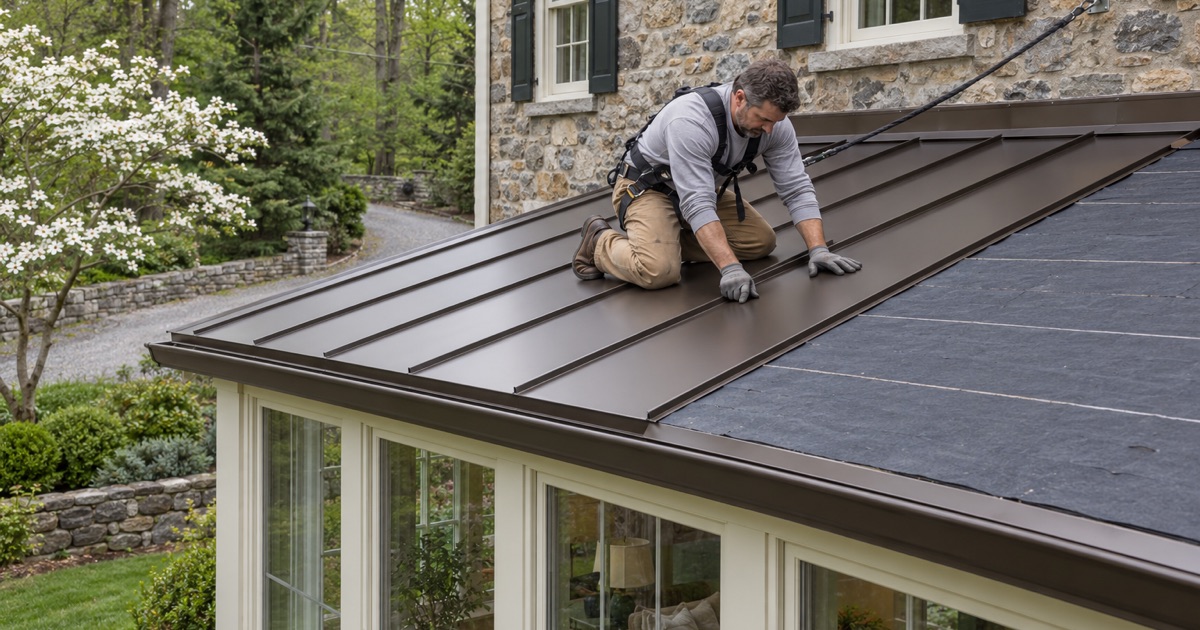
Standing seam panels run from ridge to eave with raised seams where each panel locks to the next. The fasteners are hidden under the seams on clips, so nothing is exposed to weather or sun. That concealed-fastener design is the main reason standing seam outlasts exposed-fastener metal panels, which depend on rubber washers that eventually wear out.
Snap-Lock and Mechanically Seamed Panels
Snap-lock panels click together and suit most steep roofs. Mechanically seamed panels are folded together with a seaming tool, which makes the joint tighter and more water-resistant on low slopes where water moves slowly. We choose the seam type based on the pitch of your roof, not on which one is quicker to install.
Finishes and Colors
Most residential panels are steel or aluminum with a factory-applied paint finish designed to resist fading and chalking. Darker grays, bronzes and blacks suit stone houses, while lighter colors reflect more summer heat. We bring samples so you can see the finish against your house before you choose.
Metal on Porches, Bays and Low-Slope Sections
Porch Roofs
Many older houses have a front or side porch with a roof too shallow for shingles, often covered in worn roll roofing or old flat-seam metal. Standing seam is a clean, long-lasting replacement that suits the house’s age and sheds water reliably at low pitch.
Bay Windows and Dormers
The small roofs over bay windows and shed dormers are hard to shingle neatly and often leak where they meet the main wall. Formed metal fits these shapes cleanly. We flash the top edge into the wall properly so water cannot run behind it.
Low-Slope Additions
A rear kitchen addition or sunroom with a gentle pitch is a good candidate for mechanically seamed standing seam. Where the slope is too shallow even for that, we recommend a membrane roof instead and explain why.
What Goes Under a Metal Roof
Decking and Underlayment
Metal panels need a flat, sound deck. Once the old roof is off, we inspect every sheet of decking and photograph any damage before replacing it at the per-sheet price in the contract. Over the deck we install ice and water barrier at the eaves and valleys and a high-temperature underlayment rated for use beneath metal.
Clips, Expansion and Fasteners
The clips that hold standing seam panels allow them to slide slightly as they expand and contract. Fixing a panel rigidly at both ends causes oil-canning, the waviness you sometimes see in flat metal, and can pull fasteners loose. We use the clip system the panel was designed for and fix each panel at one point only.
Flashing, Trim and Snow Guards
Eave, rake, ridge, wall and chimney flashings are formed to fit the panels, and every penetration gets a flashing that lets the metal move around it. On roofs above doors, walkways or lower roofs, we install snow guards so snow releases in small amounts rather than sliding off all at once.
Choosing Metal for a Main Line House
Metal Compared With Architectural Shingles
A standing seam roof costs more to install than an architectural shingle roof of the same size, because the panels are formed to length and the trim is fabricated for each edge and penetration. In return it has no granules to shed, no sealant strips to fail and far fewer seams for water to find. For owners who plan to stay in a house for a long time, or for a section of roof that keeps leaking as shingles, the higher first cost often makes sense.
Metal Beside Slate and Stone
On older stone houses, metal is often the right choice for the porch, bay or shed dormer while the main roof stays slate. A dark standing seam or a copper panel sits comfortably beside slate and copper gutters, while a bright painted panel can look out of place. We help you choose a finish that reads as part of the house rather than an addition to it.
Permits and Historic Districts
A metal re-roof needs the same permit as any other re-roof in the house’s municipality, and in Lower Merion that includes the roofing addendum. If the house is in one of the township’s local historic districts, a change from slate or shingle to metal is an alteration that the Historical Architectural Review Board reviews. We check the address first so a metal roof is not ordered for a house that cannot have one.
Solar on Standing Seam
Standing seam is one of the easiest roofs to mount solar panels on, because the racking can clamp to the raised seams without drilling through the roof. If you are planning solar, telling us before the roof goes on lets us lay out seams and penetrations around the future array.
Metal Roof Repairs
Fasteners and Seams
On exposed-fastener roofs, the rubber washers under each screw harden and crack over time, and each one becomes a pinhole leak. We replace worn fasteners with new ones of the right size. On standing seam roofs, we reseal or reseam joints that have opened up.
Rust and Coatings
Surface rust on older steel roofs can often be cleaned and coated, extending the roof’s life. Where rust has eaten through, we replace the affected panels and flashing, and we tell you honestly when the whole roof has reached that point.
Matching Older Metal Roofs
Old flat-seam and standing seam roofs on porches and bays were often made of terne-coated steel or copper. We repair them with compatible metals, because pairing copper with steel or aluminum causes corrosion at the joint.
- 20+ Years Roofing
- Itemized Written Scopes
- Slate Repair Specialists