Lower Merion Elite Roofing has handled commercial roofing in Lower Merion, PA for more than 20 years, serving surrounding cities including Plymouth Township, Milford Township, Yeadon, Richland Township and West Norriton. We repair and replace low-slope membrane roofs and steep-slope shingle, slate and metal roofs on offices, retail buildings, churches, schools and apartment buildings.
Commercial roofs fail differently from house roofs. Most of the trouble sits at seams, drains, parapets and rooftop equipment curbs, and a leak can travel a long way across insulation before it shows inside. We find the actual source and give building owners a straight answer about whether repairs or a replacement makes more sense.
Every commercial proposal itemizes tear-off, insulation, membrane, flashing, drains and equipment work separately, and it is written against the municipality’s commercial permit requirements so the scope does not change once the job starts.
Commercial Roof Systems
TPO and PVC Single-Ply Membranes
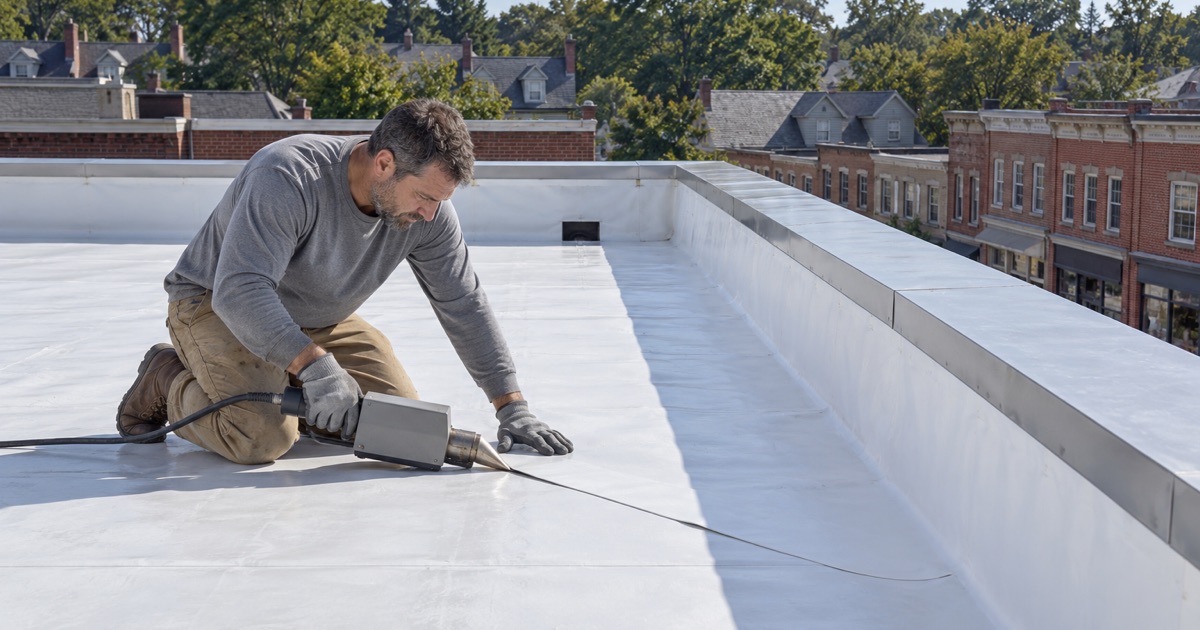
TPO and PVC are single-ply membranes with heat-welded seams, which become stronger than the sheet itself when welded properly. Their white or light surfaces reflect summer sun, reducing cooling loads. PVC also resists oils and grease, which makes it a good choice near restaurant exhaust fans.
EPDM Rubber Roofing
EPDM is a durable synthetic rubber membrane that handles heat and cold well and is straightforward to repair. It is installed fully adhered, mechanically fastened or ballasted, depending on the building. We seam it with factory tape and flash every penetration with matching EPDM components.
Modified Bitumen
SBS and APP modified bitumen are layered asphalt systems reinforced with polyester or fiberglass, installed by torch, cold adhesive or self-adhering sheets. They handle foot traffic well, which suits roofs with frequent equipment service. We choose the installation method based on the building and its fire safety requirements.
Steep-Slope Commercial Roofs
Churches, older schools and mixed-use buildings in the area often have slate, shingle or metal steep roofs alongside flat sections. We repair slate slate by slate, replace shingles to manufacturer specifications and reflash the joints where steep and flat roofs meet.
Commercial Roof Repairs
Seams, Blisters and Punctures
Open seams, blisters and punctures from dropped tools or foot traffic are the most common membrane failures. We clean and repair them with materials compatible with the existing roof, because the wrong patch material can fail to bond or even damage the membrane.
Drains, Scuppers and Ponding Water
Water that sits on a roof for days after rain speeds up aging and finds weak seams. We clear and repair drains and scuppers, correct gutters at the roof edge and, where ponding is chronic, recommend tapered insulation to restore positive drainage.
Parapets, Curbs and Rooftop Units
Parapet walls, HVAC curbs and pipe penetrations are frequent leak points. We rebuild parapet and coping flashings, reflash curbs to the correct height and seal pitch pans and pipe boots, so equipment service does not reopen leaks.
Replacing a Commercial Roof
Core Samples and Moisture Surveys
Before recommending a replacement or recover, we cut core samples to see how many roof layers exist and whether the insulation is wet. Wet insulation loses its value and traps moisture against the deck, so it must be removed even when the membrane above it looks sound.
Tear-Off, Insulation and New Membrane
A replacement starts with removing the old roof down to the deck and repairing damaged decking. We then install insulation, often with tapered sections to improve drainage, followed by the new membrane, edge metal and flashings. We remove only what can be dried in the same day.
Working Around Tenants and Customers
Occupied buildings need careful planning. We schedule noisy work and crane lifts around business hours where possible, protect entrances and walkways, keep debris contained and communicate with property managers each day about what is happening next.
Commercial Roofs by Building Type
Apartment Buildings and Associations
In a condominium or planned community, Pennsylvania’s Uniform Condominium Act and Uniform Planned Community Act make the association responsible for the common elements unless the declaration says otherwise, and the roof is often one of them. We work with boards and managers on that basis, quoting to the association, scheduling around residents and giving the board written findings it can share with owners before a vote on a large repair or replacement.
Churches, Schools and Institutional Buildings
Older institutional buildings often combine steep slate or shingle roofs with flat sections, towers, box gutters and decorative copper. Each part needs different materials and access. We plan scaffolding or lifts, protect stained glass and entrances, and phase the work so the building can stay in use.
Storefronts and Mixed-Use Buildings
Retail buildings with apartments above usually have a flat roof crowded with exhaust fans, HVAC units and vents. Those penetrations, plus parapet walls shared with the next building, are where most leaks start. We reflash each one and seal the party-wall joints so water cannot travel between buildings.
Budgeting and Capital Planning
For owners managing several buildings or a long-term budget, we provide condition reports that rank repairs by urgency and estimate the remaining life of each roof. That makes it possible to plan a replacement in a chosen year rather than after a ceiling comes down.
Permits, Codes and Paperwork
Commercial Permits by Municipality
Each township, borough and the City of Philadelphia handles commercial re-roofing permits differently, and commercial permits usually cost more and can require plans. We prepare and file the permit for the building’s own municipality and include the fee in the proposal.
Insurance and Certificates
We provide certificates of liability insurance and workers’ compensation before any work starts, naming the owner or property manager as additional insured when the contract requires it. OSHA fall protection rules apply on every roof we work on.
Maintenance Records
After repairs or a replacement, we provide a written record of the work, the materials used and the warranty terms, which helps with insurance renewals, building sales and future budgeting.
- 20+ Years Roofing
- Itemized Written Scopes
- Slate Repair Specialists