Lower Merion Elite Roofing has handled flat roof repair in Lower Merion, PA for more than 20 years, serving surrounding cities including Plymouth Township, Milford Township, Yeadon, Richland Township and West Norriton. We repair the low-slope roofs on rear additions, porches, garages, dormers, rowhouses and small commercial buildings.
Flat roofs leak in predictable places: split seams, the joint where an addition meets the main house, clogged drains and the low spots where water sits after rain. We check from inside as well as on top, so the repair goes where the water actually enters rather than where it happens to drip.
You get a clear answer about whether the roof can be repaired or has reached the end of its life, along with an itemized price for the repair before any work is done.
Flat Roof Materials We Repair
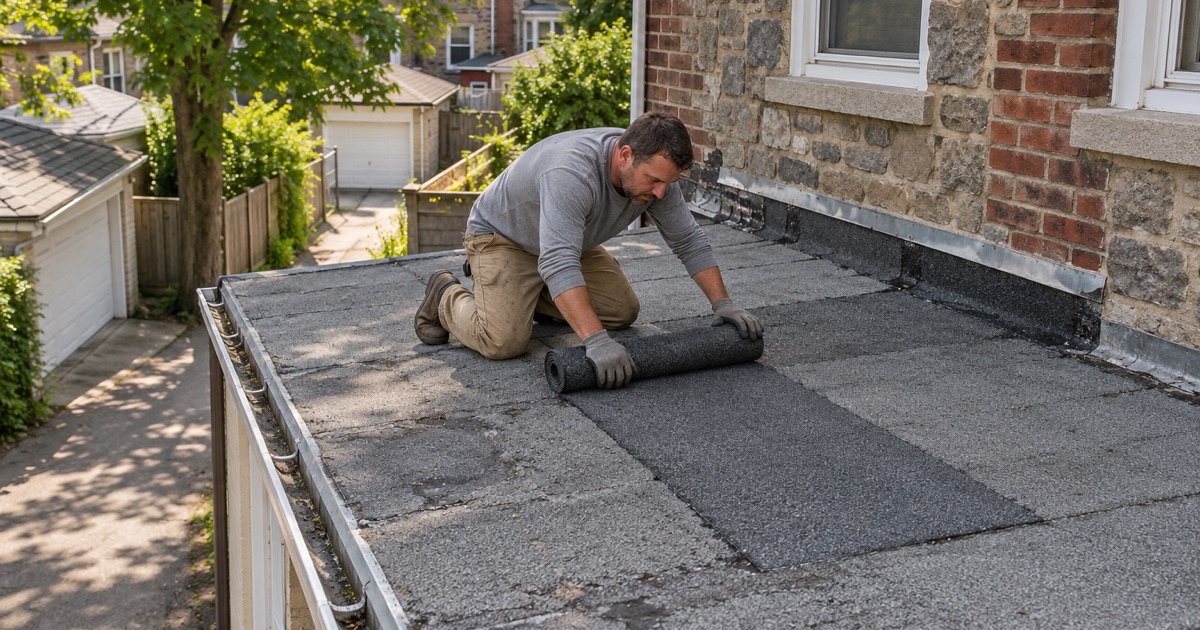
Modified Bitumen
Torch-down SBS and APP modified bitumen is common on additions and rowhouses. It fails at lap seams, blisters and cracks in the granule surface as it ages. We heat-weld or adhere new material over cleaned seams and blisters, using a compatible product so the patch bonds to the existing roof.
EPDM Rubber
EPDM rubber roofs usually fail at seams, flashings and around penetrations rather than in the open sheet. We clean and prime the rubber and repair seams and punctures with EPDM tape and cover strips, because ordinary roofing cement does not bond to rubber.
TPO and PVC
TPO and PVC membranes have heat-welded seams. When a seam lifts or the sheet is punctured, we clean the area and weld a new patch in place with a hot-air welder, which forms a bond as strong as the original seam.
Older Built-Up and Roll Roofing
Some older porches and garages still have built-up tar-and-gravel roofs or mineral-surfaced roll roofing. These can sometimes be patched for a season, but they are often near the end of their life. We tell you honestly how much life is left.
Where Flat Roofs Leak
The Wall Where an Addition Meets the House
The most common leak on a rear addition is at the joint with the main wall. The membrane should turn up the wall and be covered by counter flashing set into the masonry or tucked behind the siding. When that flashing is missing or loose, water runs behind the membrane. We rebuild the detail properly instead of caulking over it.
Seams and Edges
Lap seams and roof edges take the most stress from heat, cold and wind. We repair open seams and replace failed edge metal and drip edge, making sure the membrane drains into the gutter rather than behind it.
Drains, Scuppers and Penetrations
Roof drains, scuppers, vent pipes and skylight curbs all break the membrane and need their own flashing. We clear blocked drains, replace failed pipe boots and reflash curbs at the correct height.
Fixing Ponding Water
Why Ponding Matters
Water that sits on a roof for days speeds up membrane aging, adds weight to the structure and finds every weak seam. Ponding is often a sign of sagging framing, clogged drains or a roof built without enough pitch.
Tapered Insulation and Crickets
When a flat roof is replaced or a section rebuilt, tapered insulation can create a gentle slope toward the drain or gutter. Crickets behind chimneys and curbs redirect water around them. Both are far more reliable than patching the same low spot every year.
Clearing Drains and Gutters
Sometimes the fix is simple: a drain clogged with leaves or a gutter too small to keep up. We check drainage first before recommending structural changes.
Keeping a Flat Roof Watertight
Seasonal Checks
A flat roof benefits from a quick look each spring and fall: clearing leaves from drains and gutters, checking seams and edges, and looking for blisters, cracks or punctures. Small issues found during these checks are cheap to fix and keep water out of the insulation below.
Rooftop Decks and Equipment
Roofs that carry a deck, an air-conditioning condenser or regular foot traffic wear faster where the load sits. Walkway pads, raised sleepers under deck framing and properly flashed equipment stands spread that load and protect the membrane. We check those areas closely, because a puncture under a deck can leak for months before anyone sees it.
Insulation Upgrades During a Rebuild
When a flat roof section is rebuilt, it is the one chance to add insulation above the deck. In Philadelphia, re-roof rules can require insulation to be brought up to current levels, so we check the requirement for city addresses. Added insulation keeps the room below more comfortable and helps prevent condensation under the membrane.
Coatings and Their Limits
Reflective coatings can extend the life of some aging membranes when the roof is dry and sound. They are not a fix for wet insulation, open seams or ponding, and they can make later repairs harder. We tell you whether a coating makes sense for your roof or whether it would just hide the problem.
Repair or Replace a Flat Roof
When Repair Makes Sense
If the leak comes from one seam, one flashing or one puncture, and the insulation below is dry, a repair is the right answer. Most of the flat roof repairs we do fall into this category.
When Replacement Is Better
If the membrane is cracked across its surface, seams are failing in several places, the insulation is wet or the roof ponds badly everywhere, replacement will cost less over time than repeated patching. We show you photographs so you can judge for yourself.
Rowhouse and Twin Flat Roofs
In rowhouse neighborhoods, flat roofs often run continuously over several houses, separated only by party walls. A repair on one roof has to tie into the next one cleanly. We look at both sides of the party wall and seal the seam so water cannot travel between houses.
- 20+ Years Roofing
- Itemized Written Scopes
- Slate Repair Specialists